Review: Emblem Winter Landscape Logo Vector for Embroidery
As a designer who spends more time staring at stitch maps than actual landscapes, I approach every new emblem winter landscape logo vector with a mix of excitement and skepticism. We see countless "nature" graphics floating around the digital marketplace, but very few translate well from a flat screen to the textured reality of thread and fabric. When I first opened this specific file, my immediate thought wasn't about its potential as a website banner or a print-on-demand tee; it was about how those pine trees would hold up under a satin column and whether the mountain peaks would get lost in a dense fill.
The visual personality of this design is undeniably cozy yet adventurous. It captures that crisp, quiet mood of a snowy morning in the high country. For an embroidery project, this atmospheric quality is crucial. You aren't just stitching a shape; you are trying to evoke a feeling. This graphic leans heavily into the classic outdoor aesthetic, making it a prime candidate for brands selling hiking gear, winter apparel, or even boutique coffee shops looking to capture that "cabin vibes" market. However, the transition from a scalable vector illustration to a fixed-resolution machine embroidery design requires a critical eye.
First Impressions: Shape, Flow, and Stitch Potential
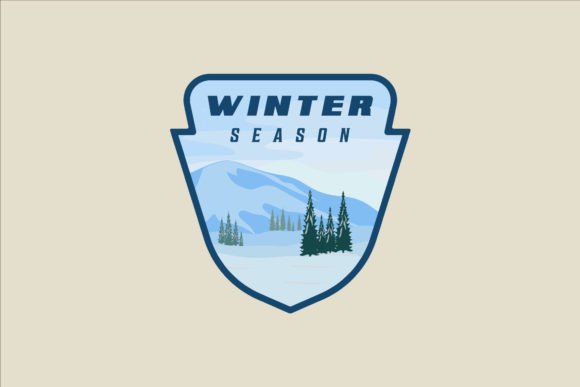
The composition of the emblem winter landscape logo vector is balanced, featuring a central mountain range flanked by stylized pines. In a digital context, these lines are crisp and infinite. In embroidery, we have to worry about stitch density and direction. My initial assessment suggests that the mountain ranges would work beautifully as a fill stitch area, perhaps using a slight gradient of blues or grays to mimic snow shadows. The pine trees, however, present a challenge. If the original vector has too many tiny branches, a standard digitization might turn them into a muddy mess of thread.
For this design to succeed as a finished product, the digitizer needs to simplify those tree details into broader shapes that can be covered with clean satin columns or simplified fill patterns. The "snowy scenery" element implies negative space or white thread usage, which can be tricky on certain fabrics. If you are planning to use this on a dark sweatshirt embroidery project, the contrast will be stunning, provided the white thread is high-quality and doesn't blend into the fabric texture after a few washes.
Real-World Application: From Concept to Custom Apparel
Let's talk about a real scenario. Imagine you run a small shop selling handmade winter accessories. You decide to create a limited run of embroidered tote bags for the holiday season. This emblem winter landscape logo vector fits perfectly here. The horizontal layout works well across the lower third of a canvas bag. Because tote bags often carry heavy items, the fabric can distort. A design with large, open areas like this landscape needs a robust stabilizer to prevent puckering. If the stitch count is too high in the mountain section, the bag might warp over time.
Another strong use case is custom apparel, specifically hoodies or crewnecks. The emblem style naturally lends itself to left-chest logos or large back prints. I can visualize this stitched in woolly threads on a heather gray fleece, giving it a rugged, textured look that appeals to outdoor enthusiasts. For Etsy sellers, this kind of versatility is gold. You can offer this as a personalized gift option, perhaps adding a monogram below the mountain range. Just be careful with lettering; if the font is too thin, it won't match the boldness of the landscape graphic.
I also see potential in home decor, such as pillow covers or kitchen towels. A holiday embroidery project featuring this winter scene could become a staple item for customers looking to refresh their living rooms for the season. The key here is scale. On a small tea towel, you might need to reduce the size significantly, which brings us to the limitations of the design.
Navigating Technical Limitations and Fabric Choices
While the emblem winter landscape logo vector is visually striking, it is not without its constraints when moved into the physical realm. The most significant concern is detail loss in small hoop sizes. If you attempt to stitch this onto a cap or a baby onesie, the intricate details of the "pines and mountain" may merge together. Caps, with their curved surfaces, are particularly unforgiving. The push and pull of the thread on a structured front panel can distort the straight lines of the mountains, making them look wavy unless properly compensated during digitizing.
Fabric texture plays a massive role here. On a smooth, tight-weave cotton, the design will look sharp. On a textured linen or a looped terry cloth towel, the edges of the satin stitch borders might get lost. For stretchy fabrics like performance tees, you must ensure the design isn't too dense, or it will crack and feel like a plastic patch rather than part of the garment. Always test the design on scrap fabric that matches your final product. Check how the thread colors interact with the material; a cool blue might look vibrant on white but disappear on navy.
Furthermore, consider the washing instructions for the finished product. Dense areas, especially if the digitizer opted for heavy coverage to simulate the vector's solid look, can become stiff. For items like baby clothes or frequently washed kitchen towels, you want a lighter touch. Maybe use a running stitch outline for the mountains instead of a full fill to maintain softness.
Enhancing Brand Value and Customer Trust
Using a high-quality graphic like this elevates the perceived value of your handmade product. Customers associate clean, professional embroidery with quality craftsmanship. If the emblem winter landscape logo vector is executed well, with crisp edges and appropriate thread choices, it signals that you care about the details. This builds trust. Conversely, a poorly stitched version with visible gaps or puckering can damage your reputation as a craft business owner.
For those selling digital embroidery files or design assets, presenting this design in realistic mockups is essential. Show it on a variety of backgrounds—light, dark, and textured. Demonstrate how it looks as an embroidered patch versus direct-to-garment stitching. This helps buyers visualize the potential and reduces the likelihood of returns due to mismatched expectations.
Practical Notes for the Serious Maker
Before you commit to a production run or list this as a new item in your shop, keep these practical steps in mind:
- Test First: Never skip the stitch-out on scrap material. Verify that the thread colors provide enough contrast, especially for the snow elements.
- Check Licensing: Since this originates as a vector template, confirm the license terms. Can you sell the stitched item? Can you sell the digitized file? Don't assume; read the fine print to avoid legal issues with your small shop product line.
- Stabilizer Selection: Match your stabilizer to the fabric. Cut-away is usually safer for stretchy garments, while tear-away works for stable wovens.
- Detail Inspection: Zoom in on the digitized preview. Are the tiny tips of the pine trees actually stitchable, or will they just be loose jumps? Simplify if necessary.
- Mockup Variety: Create black and white mockups to check the silhouette. If the design loses its identity without color, it might be too complex for small-scale embroidery.
In conclusion, the emblem winter landscape logo vector is a versatile asset with strong potential for the right applications. It shines in commercial embroidery projects where there is enough room for the details to breathe, such as adult apparel, tote bags, and home decor. With careful attention to digitizing nuances, fabric selection, and stabilization, it can become a standout piece in your portfolio. Treat it not just as a graphic, but as a blueprint for a tactile experience, and your customers will feel the difference in every stitch.